SFO / KLUB
Parent Welcome Guide · Lycée Français Prins Henrik
The SFO at Lycée Français Prins Henrik
The SFO is an integral part of the educational experience at Lycée Français Prins Henrik. It is a distinct pedagogical environment where children can develop socially, personally, emotionally, and creatively beyond the structures of formal teaching. Inspired by the principles of Danish SFO pedagogy, the afternoon offers a different framework from the school day, with opportunities for free play, free choice, participation, building relations, creativity and developing independence.
-
Within this environment, the pedagogical team have an active and important role. They create and protect the conditions in which children can play, belong, participate, explore and develop. They support children in building relationships, joining communities and discovering new interests, while also respecting children's own choices and initiatives. Free choice does not mean that children are left on their own: pedagogues observe, listen and remain available, stepping in to guide, encourage, structure, challenge or protect when needed. Our aim is therefore not only to follow what children already know and choose, but also to open doors to new experiences and possibilities. Through activities, play, conversations and everyday relationships, we encourage curiosity, independence and participation while paying attention to each child's well-being and sense of belonging.
Daily Essentials
SFO/Klub begins at 14h15 (14h00 on Fridays) and closes at 17h00.
Children bring their own snack: fruit, vegetables or a sandwich. No candy, sweets, ice cream or soft drinks.
Families are free to choose when they pick up their children, until 17h00. Allow a few minutes for your child to finish and tidy up.
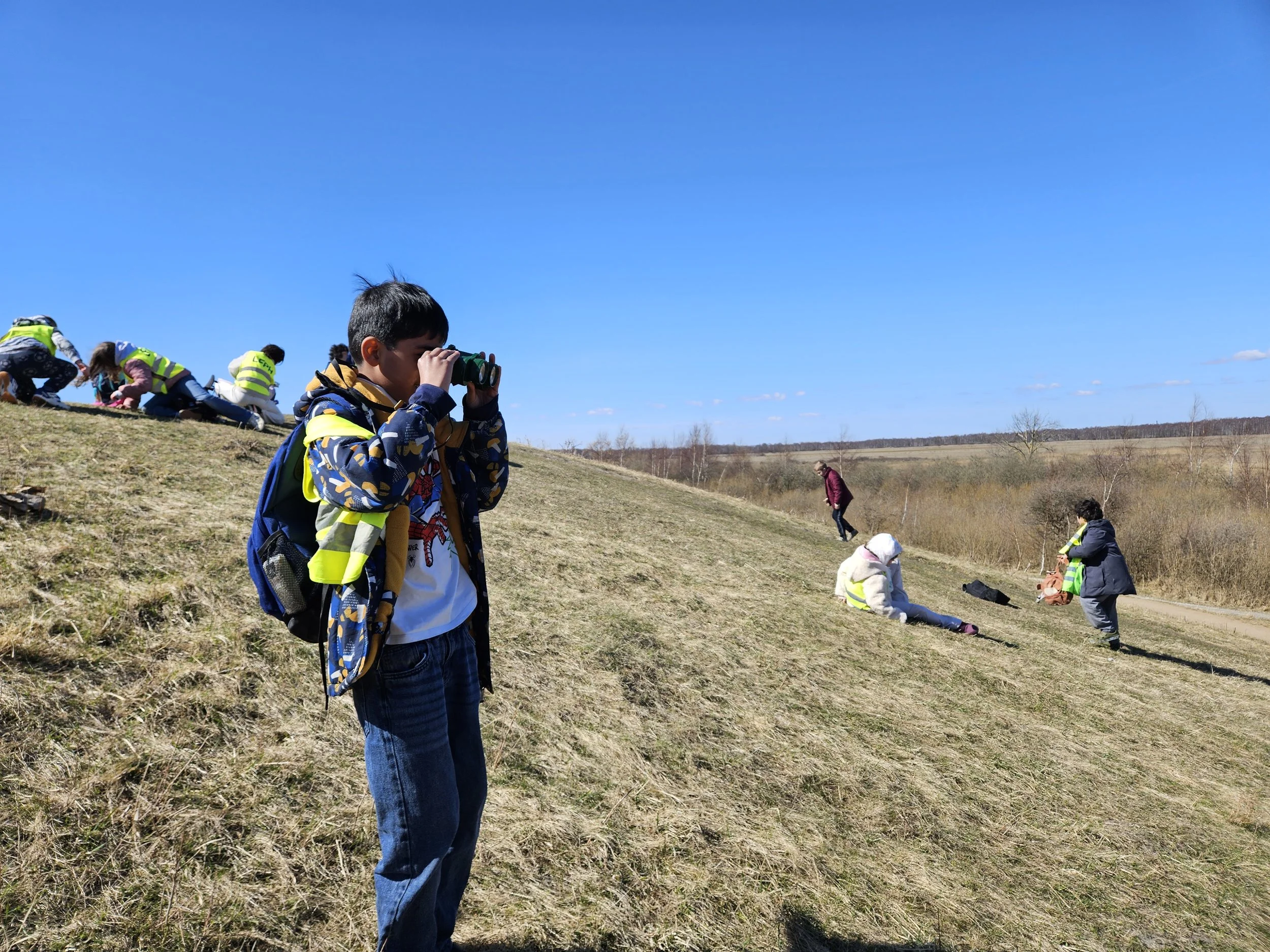
Children play outdoors all year, whatever the weather. Bring rainwear and warm clothes, all labelled with your child's name.
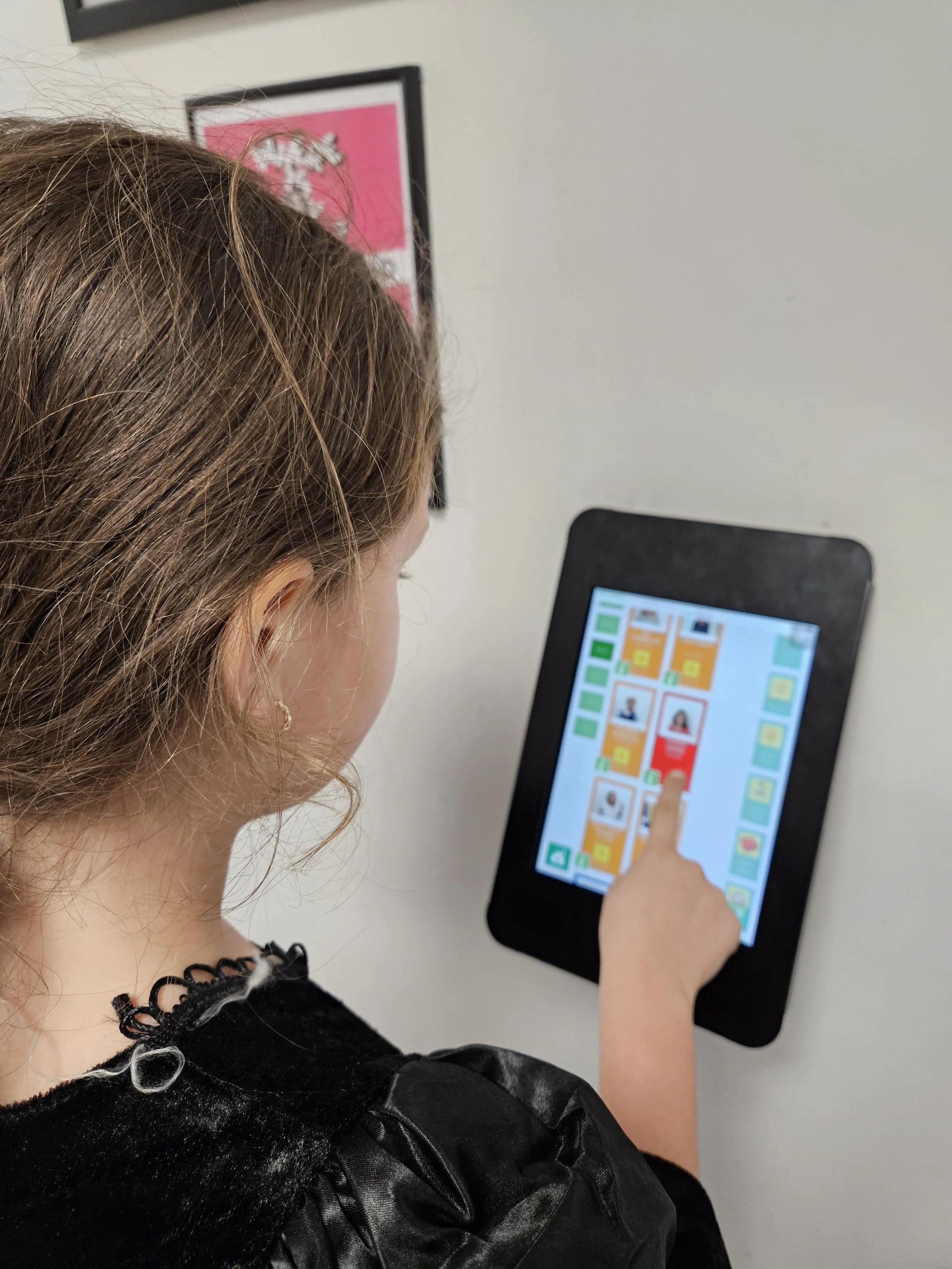
Check which room or area your child is in on the EasyKom tablets in the corridors or on the EasyKom app. If you cannot find your child, ask a team member.
SFO/Klub closes at 17h00. A late pick-up fee of 100 DKK per half hour applies after 17h00. Please call as soon as you know you will be late.
What happens after school ?
14h15 (14h00 on Fridays) → SFO/Klub begins
-
One member of the team picks up the children from their classrooms. Each class has a referent who accompanies the children through the transition from school to SFO/Klub. The children have their afternoon snack (goûter) together. During this time, the adults help them settle in, tidy up with the children, present the activities available that afternoon and support them in understanding the different possibilities. The children are also checked in on the EasyKom tablets. This allows the adults to keep track of which children are present and where they are during the afternoon. The children are introduced to the activities available and can choose what they would like to participate in. Free choice is an important part of our pedagogy: we encourage children to discover new activities and support them in making choices, while respecting that they have different interests, personalities, needs and ways of participating.
14h30 -14h45 → Outdoor free play
-
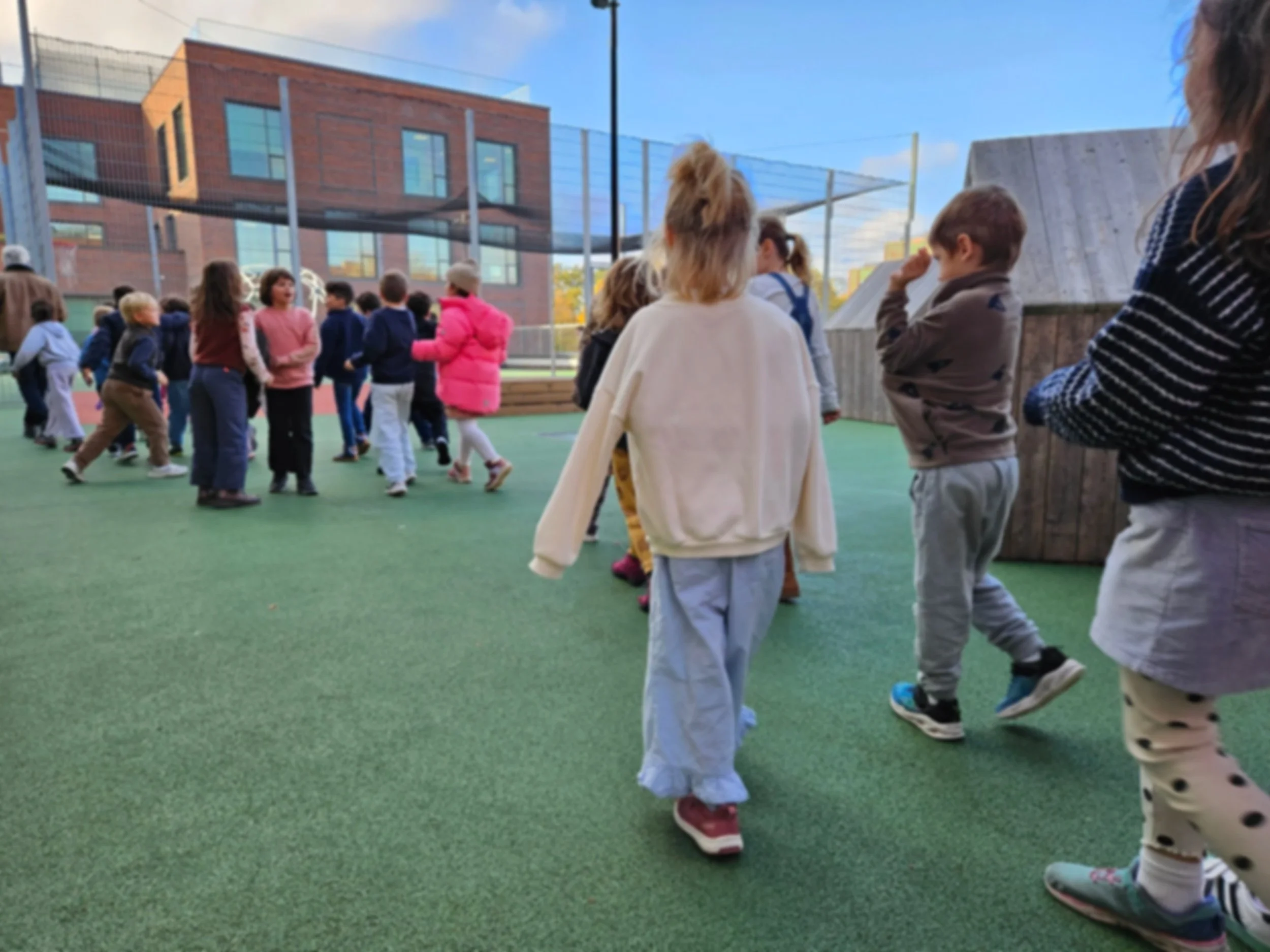
After the snack and registration, the children go outside for approximately 10–15 minutes of free play before the organised activities begin. This transition gives children an opportunity to move, play freely, interact with friends and shift from the more structured school day into the SFO environment.
14h50 → Activities, workshops and specialized rooms open
-
Activities are organized according to age/level, interests and available spaces, and some activities have a limited number of places to ensure that children can participate in good conditions. Children choose which activity or space they would like to join and move to the corresponding location. They are responsible for registering themselves on the EasyKom tablets every time they change rooms, with reminders and support from adults. This allows the team to keep track of where the children are during the afternoon while gradually encouraging them to develop independence and take responsibility. The programme offers a variety of activities, workshops and opportunities for both guided and free play. Children may also choose to remain outside or use other available spaces. The role of the pedagogical team is therefore not simply to direct children from one activity to another. It is to create opportunities, present possibilities, encourage participation, support social interactions and help children develop the confidence and independence to make their own choices. At the same time, free choice does not mean that children are left without adult support. We observe the children, help them discover different possibilities and encourage them to try new activities when appropriate. The aim is to find a balance between encouragement and autonomy, while recognizing that play and choosing how to spend one's afternoon are themselves important parts of children's development. In this way, the SFO provides a space where children can gradually develop independence, responsibility, social skills and a sense of belonging, while still having the freedom to play, explore and simply be children after their school day.
Free choice does not mean that children are left on their own: pedagogues observe, listen and remain available.
What should we do when leaving SFO/Klub ?
-
Families are free to choose when they pick up their children (until 17h). There is no fixed pick-up time. Please try to allow enough time for the pick-up to be calm and unhurried. Children may need a few minutes to finish what they are doing, put materials away and tidy up their activity before leaving. We want to respect their play, projects, and responsibilities rather than ask them to stop everything immediately. If possible, please avoid rushing your child when you arrive. Once you have picked up your child, please collect their belongings and leave the school together. We understand that children may want to continue playing when they see friends, but remaining in the playground or in the kindergarten areas after pick-up is not possible. Having children who have already been picked up remain in the school makes it difficult for us to maintain the same safety, supervision and rules for all children. For this reason, once the pick-up has taken place, we ask families to head home.
-
We also ask families to avoid using their phones while picking up their children, so that the focus can be on the child and the transition from SFO/Klub to home. Please do not bring candy, ice cream or other treats for your child or for other children when picking them up. We want to maintain the same approach to food for all children and avoid situations where some children receive treats while others do not.
-
When you arrive to pick up your child, you can check which room or area they are in using the EasyKom tablets located in the corridors or directly through the EasyKom app on your phone. EasyKom shows your child's current registered location, making it easier for you to find them at pick-up. Please note that there may occasionally be a short delay in updating a child's location, or an error in the registered information. Thank you for your patience and understanding. If you cannot find your child, please ask a team member for assistance. We will be happy to help you locate them.
-
1. Say goodbye to an adult. 2. Check out on the EasyKom tablet by pressing your child's photo until it turns red.
What types of activities do we offer?
Our activity programme offers a variety of possibilities so that children can choose according to their interests, energy level and curiosity.
-
Outdoor play and sports
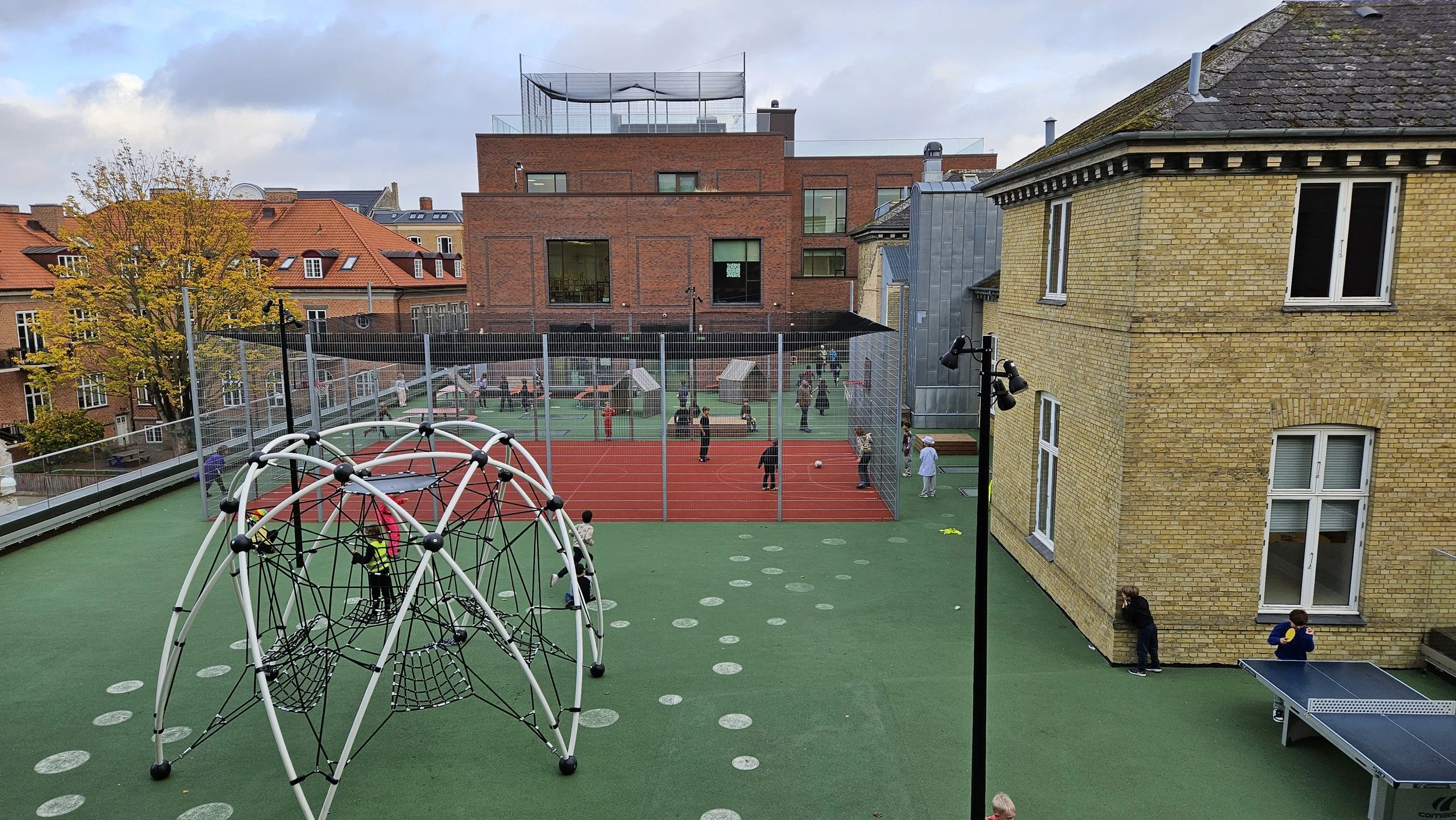
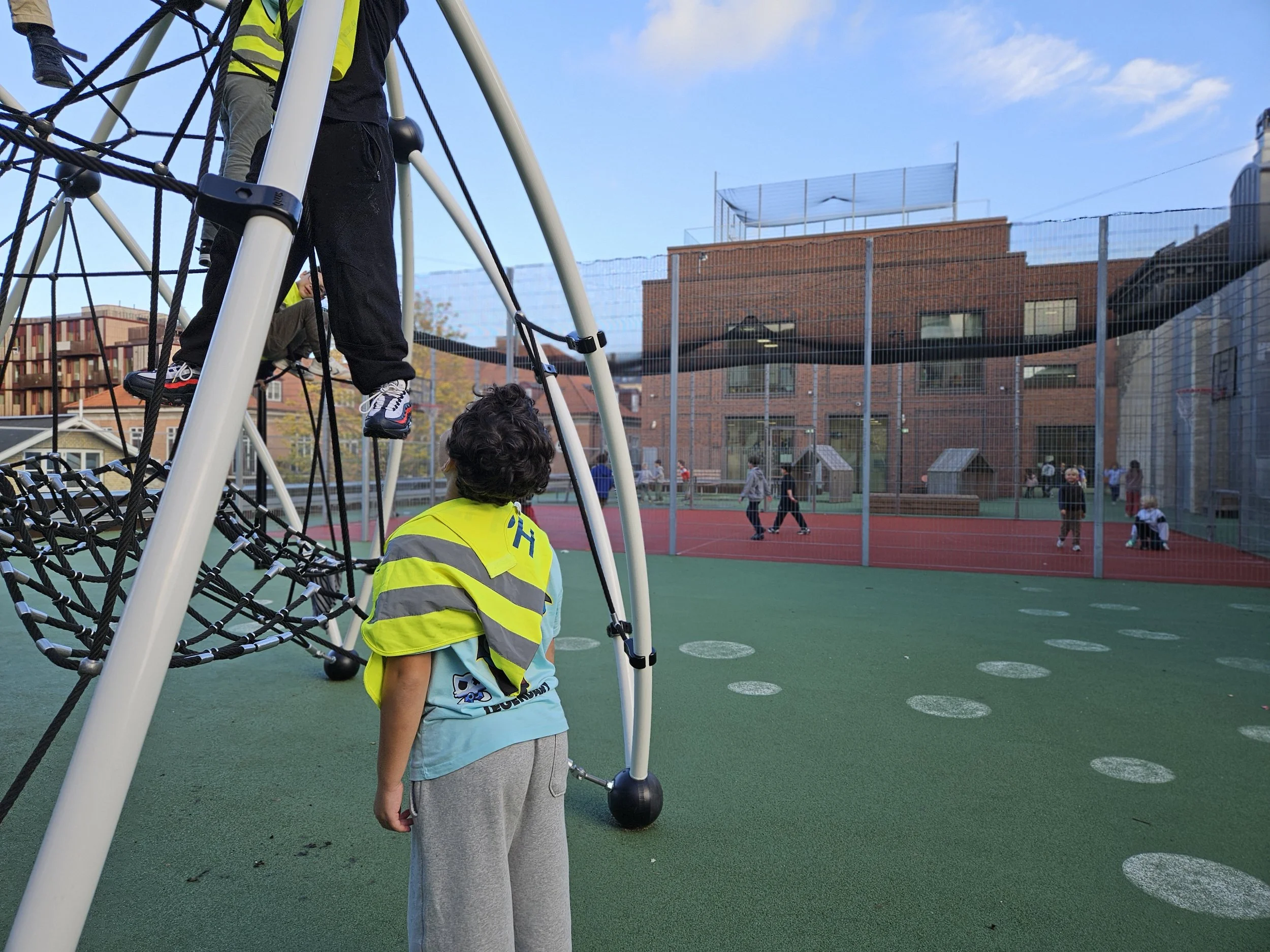
The playground is always open for free play and sports. Children can choose to play freely, move around, or spend time with friends. When staffing allows, we also have an adult-led play initiative in the playground. We propose and organise a group game that children can join, such as theatre games, chase games, paper-plane activities and other spontaneous group activities.
-
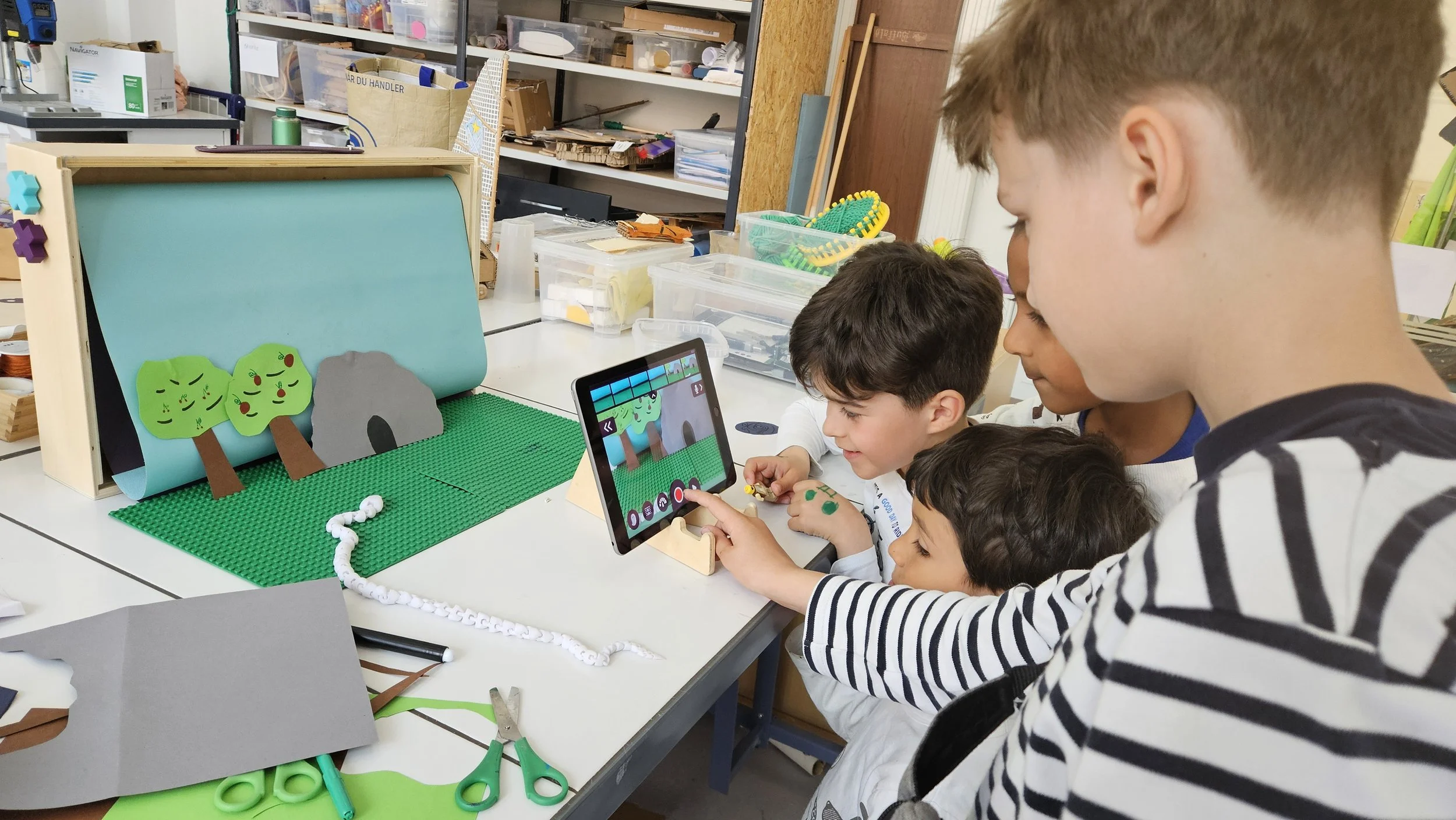
Creative & artistic workshops
We regularly offer a variety of creative workshops, including: weaving and textile art, maquette and construction projects, stop motion, theatre, collage, modelling, painting, cooking workshops and perler beads. These activities give children opportunities to create, experiment, develop their skills and work both independently and together with others.
-

LEGO room
The LEGO room is open every day, giving children the opportunity to build, create and play independently or with others.
-
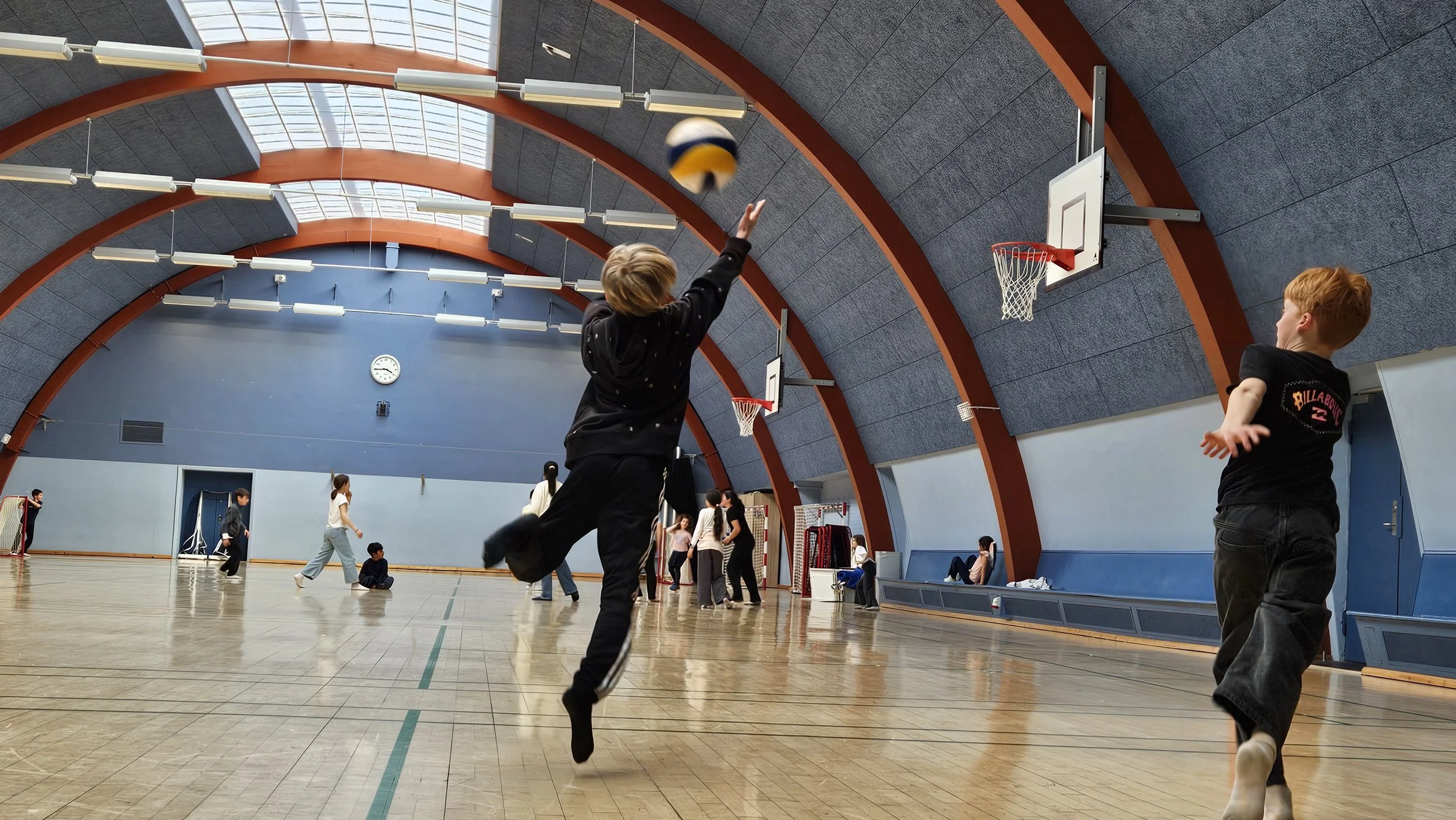
Sports activities
We also offer organised sports activities on the 4th floor, with different activities depending on the day and the programme. The aim is to offer a broad and varied range of activities, while keeping free choice at the centre of the SFO. Children can participate in organised activities, choose free play, spend time outdoors, or move between different possibilities during the afternoon.
-
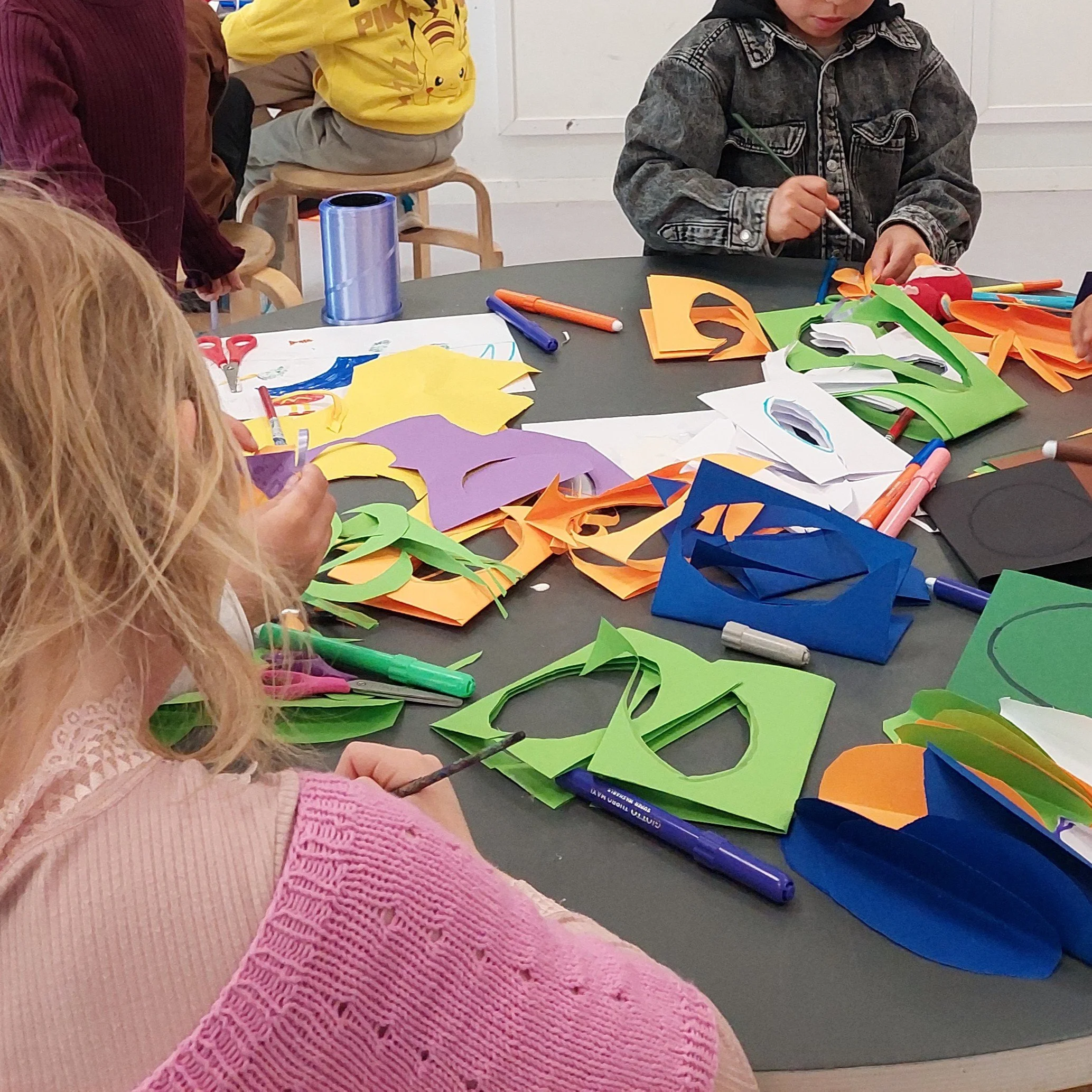
Salle Biscuit (Cookie room)
The Cookie room is a more calm and flexible space where children can: play board games, draw and design, read, and spend time with friends in a quieter environment.
-
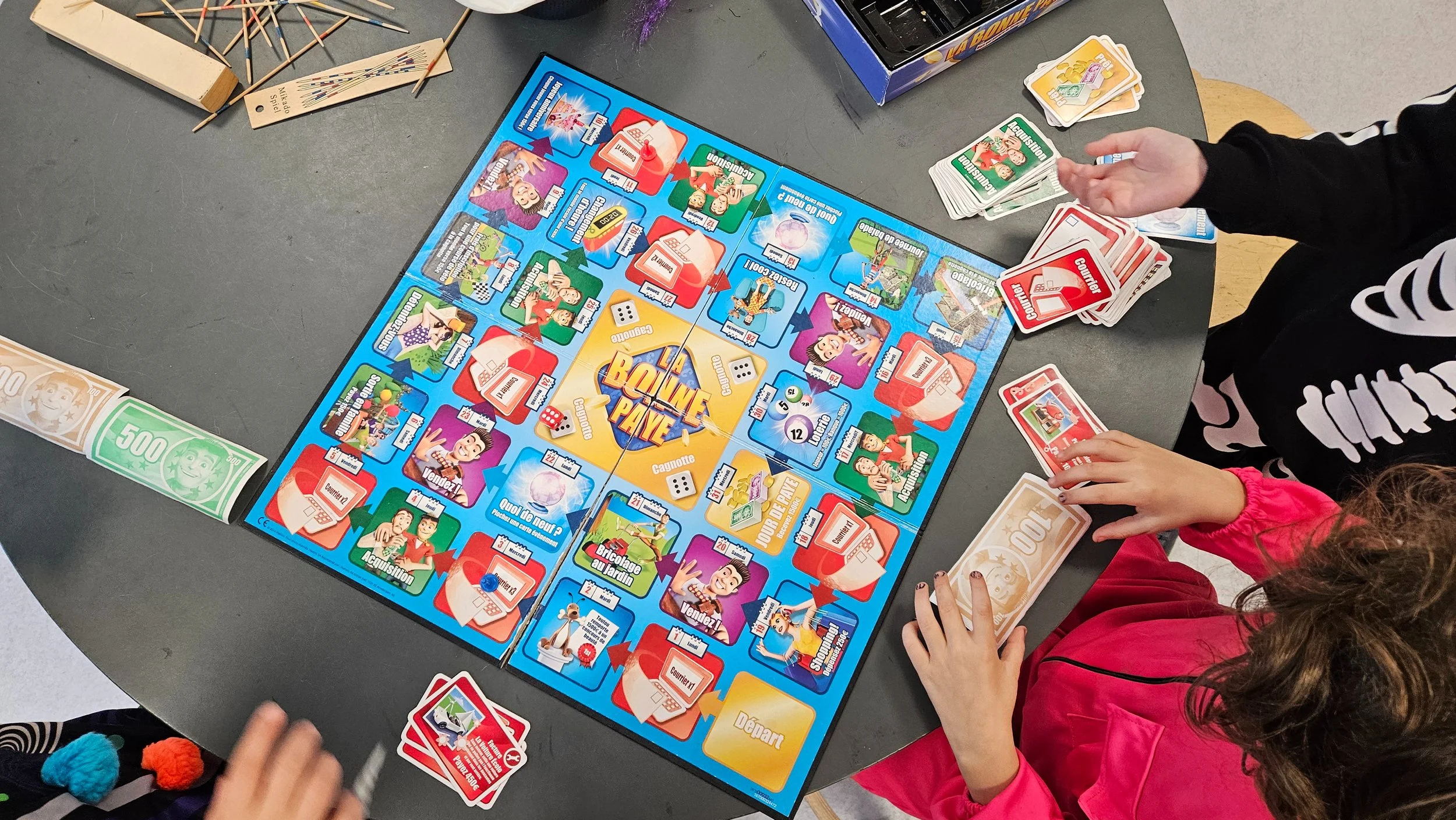
Collective games & collaborative activities
Activities include quizzes, Loup-Garou (Werewolf), cooperative board games, team challenges, riddles and problem-solving games. Children practise communication, logical thinking, listening, decision-making and collaboration while learning to contribute to a shared experience.
The aim is to offer a broad and varied range of activities, while keeping free choice at the centre of the SFO. Children can participate in organised activities, choose free play, spend time outdoors, or move between different possibilities during the afternoon.
How we manage conflicts
Conflicts and disagreements are a natural part of children's social development. At SFO/Klub, we see these situations as opportunities for children to develop communication, empathy, responsibility and strategies for managing relationships. Our approach is rooted in our pedagogical principles, particularly Relationships & Belonging, Inclusion & Communities, and Well-being, Care & Development. We believe that every child should experience:
“There is a place for me here.”
-
Our goal is not simply to resolve individual conflicts, but to help every child find their place in the community, develop positive relationships and participate meaningfully in everyday life. We pay attention not only to individual situations, but also to group dynamics, the relationships between children and the environments in which they play and interact. We are also inspired by the principles of Fri for Mobberi, which promotes kindness, respect, tolerance, care and courage in children's relationships. These principles support our commitment to creating communities where children feel safe, experience belonging and learn to take responsibility for how they treat one another. Our work therefore involves both responding to conflicts when they occur and actively creating the conditions that help prevent bullying, exclusion and isolation. We support children in building friendships, joining play, respecting differences and recognising that everyone has a role in creating an inclusive community.
-
Children may experience the same situation differently, and their feelings, perspectives and experiences deserve to be heard. The pedagogical team listens to the children involved and seeks to understand what has happened. Adults guide children in expressing their feelings, listening to others, understanding the impact of their actions and finding constructive ways forward. At the same time, adults set clear boundaries and ensure that everyone feels safe and respected. When a child is hurt, threatened, intimidated, repeatedly targeted or excluded, adults intervene to stop the behaviour and protect the child. The pedagogical team takes repeated aggression, intimidation and exclusion particularly seriously and ensures appropriate protective measures, communication with families when necessary, and follow-up. We recognise that disagreements are a natural part of children's social development and can provide opportunities for learning when guided by adults. However, bullying, repeated harmful behaviour and exclusion require a different response from ordinary disagreements. The pedagogical team is responsible for assessing each situation, supporting the children involved, addressing harmful behaviour and working to ensure that every child can participate, develop positive relationships and experience a sense of safety and belonging.
-
Preventing bullying and exclusion is an important part of our everyday pedagogical work. Inspired by Fri for Mobberi, we focus on strengthening children's sense of community and helping them develop empathy, respect and care for one another. We encourage children to notice when someone is left out, invite others into play, respect differences and take responsibility for how they treat others. We also help children understand that inclusion is not only about individual friendships, but about the environment we create together and the opportunities every child has to participate. We pay attention to group dynamics and to children who may be isolated, repeatedly excluded or struggling to find their place. Adults support children in entering play, building relationships and developing positive ways of interacting with one another. Creating an inclusive community is a shared responsibility. Adults actively contribute by setting clear expectations, supporting positive relationships, addressing exclusion and helping children understand how their words and actions affect others.
-
As part of our preventive work, we help children understand that everyone has the right to feel safe and comfortable in their own body. We encourage children to respect their own and others' boundaries, ask before touching someone, and stop when someone says “stop” or indicates that they do not want to be touched. We also talk about privacy and personal space, including appropriate behaviour in toilets and other private areas. These topics are introduced in age-appropriate ways through posters, stories, games, conversations and short educational videos. These everyday conversations help children develop awareness of boundaries, respect for others and the confidence to speak to an adult when something does not feel right.
How adults respond
-
We first make sure that all children are safe. When necessary, we separate children, stop the situation and give everyone time to calm down.
-
We help children reflect on what happened, express their feelings and needs, and find ways to move forward. Depending on the situation, this may include repairing a relationship, finding a solution together or supporting children in rejoining play. We also help children reflect on how their actions affect others and how they can contribute to a respectful and inclusive community.
-
If a concern involves exclusion, repeated conflict or difficulties within a group, we continue to observe the situation and the children's relationships. We do not consider the matter resolved simply because one incident has ended. We pay particular attention to recurring patterns and to children who may be experiencing difficulties participating in the group or building relationships.
-
Relevant information is shared with the appropriate referent, coordinator, teacher or other professional so that the adults around the child can work together and provide continuity.
-
Serious or repeated incidents are documented and followed up according to school procedures. This helps us identify patterns, understand recurring situations and ensure that appropriate action is taken.
Reporting a concern and follow-up
We encourage children to seek help from an adult whenever something happens, whether they are directly involved or have witnessed a situation. Children can approach any team member or adult they trust. Families are also encouraged to contact the SFO/Klub team if their child shares a concern. Sharing concerns with us allows us to understand the situation in its context and work together on an appropriate response. When a concern requires follow-up, we involve the relevant adults and families as appropriate and continue to observe the situation.
We respect the privacy of all children involved. This means that we cannot share confidential information about another child, including their personal circumstances, conversations with adults, or actions taken with them or their family. We cannot promise confidentiality when a situation needs to be shared, reported or followed up in order to ensure a child's safety and well-being. Relational conflicts and concerns between children should be handled by the adults responsible for the children. Parents are therefore asked not to approach or question other children directly. This protects the children involved and allows the adults responsible for them to understand and address the situation appropriately.
Our goal
Our aim is not only to stop negative behaviour, but to build a community where children can develop positive relationships and find their place. Through our everyday pedagogical work and the principles of Fri for Mobberi, we strive to create an environment where kindness, respect, tolerance, care and courage are part of how we interact with one another. We want every child to have opportunities to make friends, join play, participate in the group and experience that they are safe, included and valued.
Every child should have the opportunity to belong, and every adult has a responsibility to help make this possible.
Practical information for everyday SFO/Klub life
-
Children bring their own afternoon snack (goûter) to SFO/Klub. We recommend simple, healthy and nutritious options such as fruit, vegetables, sandwiches or similar snacks. Please choose food that children can eat independently and that gives them energy for an active afternoon. Candy, sweets, ice cream and soft drinks/sodas should not be brought to SFO/Klub.
-
Children spend time outdoors throughout the year, whatever the weather. Please make sure your child has clothing and footwear suitable for the season and weather conditions, including rainwear and warm clothing when needed. Please label all clothing, shoes and personal belongings with your child's name. Personal toys and other belongings should generally not be brought to SFO/Klub. If your child needs a comfort object, such as a teddy bear, please note that it remains the family's responsibility, and SFO/Klub cannot take responsibility for belongings that are lost or damaged.
-
Our main tool for attendance, pick-up arrangements and practical communication. Families can check their child's status and location, send messages, inform us about changes, authorise another person to collect their child and register for school holidays. Login details are sent by email; check your spam folder.
-
If your child leaves independently, or with another family, a babysitter or another adult, we need prior authorisation by email or through EasyKom.
-
SFO/Klub is open from 7h20 to 17h00 during school holidays. Registration opens a few weeks before each holiday.
-
SFO/Klub closes at 17h00. A late pick-up fee of 100 DKK for half hour applies after 17h00. If you know that you are going to be delayed, please contact the SFO/Klub as soon as possible.
Our SFO/Klub team leadership
Open and respectful communication between families and the SFO/Klub team is an important part of working together around the children.

Adrian Bourgeais
SFO/Klub & Maternelle Leader
Karina USABIAGA PITRAT
maternelle Team Coordinator
Mariana PRADO
sfo/klub Team CoordinatorWho to contact and how
For everyday questions, practical information, pick-up changes, concerns or requests for a meeting:
Email accueil.sfo@lfph.dk or send a message through EasyKom.
For urgent matters or if you are delayed for pick-up, call +45 33 55 00 79.
Emails and EasyKom messages may not be read immediately: during the afternoon the team is supervising and supporting children.